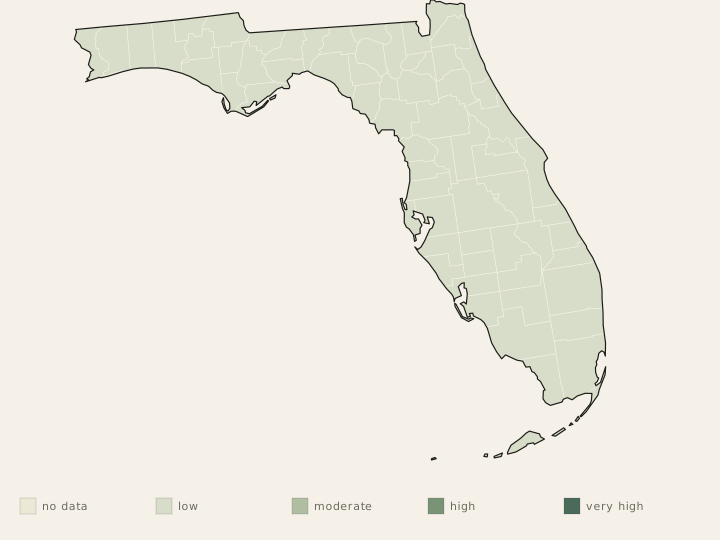
Common species in Florida
Florida follows the split authority source pattern. The species below are drawn from the state-authority sources listed in the sidebar Data Row.
- Gulf Coast tick (coastal + peninsular Florida)
- Blacklegged tick (northern Florida + Panhandle)
- Asian longhorned tick (FDACS + UF/IFAS watch context)
When ticks are most active
Year-round activity in much of Florida. Lone star tick most active April-August but can persist; brown dog tick is essentially year-round (especially indoors and in kennels — major South Florida RMSF driver); American dog tick peaks spring-summer; Gulf Coast tick coastal + year-round. Winter does not reliably suppress tick activity in central + south Florida.
Where you're most likely to encounter ticks
Everglades + Big Cypress hiking, Panhandle pine forests + state parks, North Florida + UF Gainesville area, Ocala National Forest, Central Florida lakeside trails, Tampa Bay + Sarasota suburban edges, South Florida kennel + working-dog environments (brown dog tick), Florida Keys (limited but real), dog walking in tall-grass edges year-round.
Disease context
Each disease named below carries an evidence tag per the Data Row policy. Pills indicate the strength of state-specific evidence, not the severity of the disease. Symptoms should always be routed to a clinician; this is orientation, not diagnosis.
- Rocky Mountain spotted feverstate surveillance confirmed
Florida DOH tracks RMSF; brown dog tick is the primary vector in South Florida cluster outbreaks
- Ehrlichiosisstate surveillance confirmed
- Alpha-gal syndromestate unique angle
Lone star tick range puts Florida in the AGS watch zone; UF research has documented cases
- STARIregional pattern
Lone star tick territory — Florida is in the STARI distribution
- Tularemianon diagnostic mention only
- Tickborne relapsing fevernon diagnostic mention only
- Lyme diseasenon diagnostic mention only
Not a Florida lead frame — incidence is low and many cases are travel-associated
If you find a tick — what to do
Map resolution notes
mixed resolution.FDOH publishes county-level RMSF + ehrlichiosis surveillance. UF/IFAS publications support ecoregion-resolution claims (Panhandle vs Peninsula vs Keys). South Florida brown-dog-tick RMSF clusters are well-documented at the neighborhood scale in specific case reports — those should be cited individually, not generalized statewide. CDC maps support national comparison.
State sources
- Primary species source
- Florida Department of Health (FDOH) Tick-Borne Diseases hub; UF/IFAS Entomology and Nematology Department publications on Florida tick species, life cycles, and brown dog tick / RMSF ecology.
- Primary health source
- FDOH Bureau of Epidemiology + Tick-Borne Diseases pages; FDOH RMSF, ehrlichiosis, and ehrlichiosis/anaplasmosis surveillance reports; CDC pages and maps for national guardrails.
- Primary extension source
- UF/IFAS Extension publications on lone star tick, brown dog tick, American dog tick, Gulf Coast tick, and Florida-specific tick management.
- Surveillance
- FDOH tickborne disease surveillance + Florida Department of Agriculture and Consumer Services (FDACS) animal-health context; UF/IFAS Medical and Veterinary Entomology; CDC for national comparison.