Common species in Georgia
Georgia follows the split authority source pattern. The species below are drawn from the state-authority sources listed in the sidebar Data Row.
- Gulf Coast tick (coastal + south Georgia)
- Blacklegged tick (north Georgia mountains + Piedmont)
- Asian longhorned tick (Georgia Dept of Agriculture + UGA surveillance — established in multiple GA counties)
When ticks are most active
Long active window — April through October across most of Georgia, longer in coastal + south GA. Lone star tick most active April-August (statewide and a major AGS driver in the South); American dog tick spring-summer; brown dog tick year-round in kennels + indoor environments; coastal GA can see activity in mild winters.
Where you're most likely to encounter ticks
North Georgia mountains + Chattahoochee National Forest, Atlanta + metro suburban edges (Cobb, Gwinnett, Fulton), Athens + UGA area, Macon + middle Georgia trails, Savannah + Tybee + coastal Georgia, Cumberland Island, Okefenokee Swamp, hunting properties statewide (especially South Georgia), dog walking in any wooded or tall-grass edge year-round in southern GA.
Disease context
Each disease named below carries an evidence tag per the Data Row policy. Pills indicate the strength of state-specific evidence, not the severity of the disease. Symptoms should always be routed to a clinician; this is orientation, not diagnosis.
- Rocky Mountain spotted feverstate surveillance confirmed
- Ehrlichiosisstate surveillance confirmed
Lone star tick territory; GA reports significant ehrlichiosis case loads
- Alpha-gal syndromestate unique angle
Georgia is in the documented AGS high-incidence cluster; major lone star tick territory across most of the state
- STARIregional pattern
Lone star territory — STARI is regionally relevant
- Anaplasmosisstate surveillance confirmed
- Lyme diseasestate surveillance confirmed
Lower per-capita than Northeast but present in north Georgia mountains + Piedmont
- Tularemianon diagnostic mention only
If you find a tick — what to do
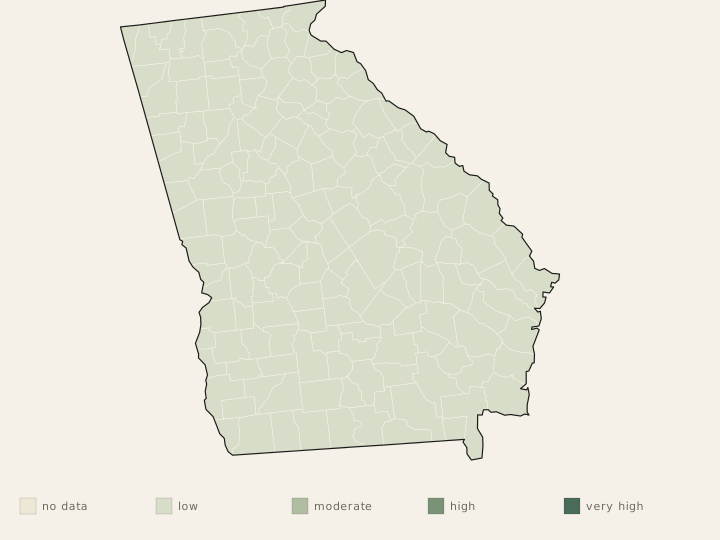
Map resolution notes
mixed resolution.Georgia DPH publishes county-level reportable disease data supporting county-resolution claims for RMSF + ehrlichiosis + Lyme. UGA Extension covers ecoregion-resolution (Mountains vs Piedmont vs Coastal Plain). CDC maps support national comparison.
State sources
- Primary species source
- Georgia Department of Public Health (DPH) Tick-Borne Diseases hub; University of Georgia (UGA) Cooperative Extension + UGA Department of Entomology publications on GA tick species; Georgia Department of Natural Resources for wildlife/habitat context.
- Primary health source
- Georgia DPH Tick-Borne Diseases hub + DPH reportable disease surveillance; CDC pages and maps for national guardrails (CDC is headquartered in Atlanta — GA-relevant editorial relationship).
- Primary extension source
- UGA Cooperative Extension + UGA Department of Entomology publications on lone star tick, brown dog tick, alpha-gal syndrome, and yard/property tick management.
- Surveillance
- Georgia DPH tickborne disease surveillance; Georgia Department of Agriculture animal-health + Asian longhorned tick monitoring; UGA Entomology + Southeast Regional Center for Excellence in Vector-Borne Diseases (CDC-funded); CDC for national comparison.