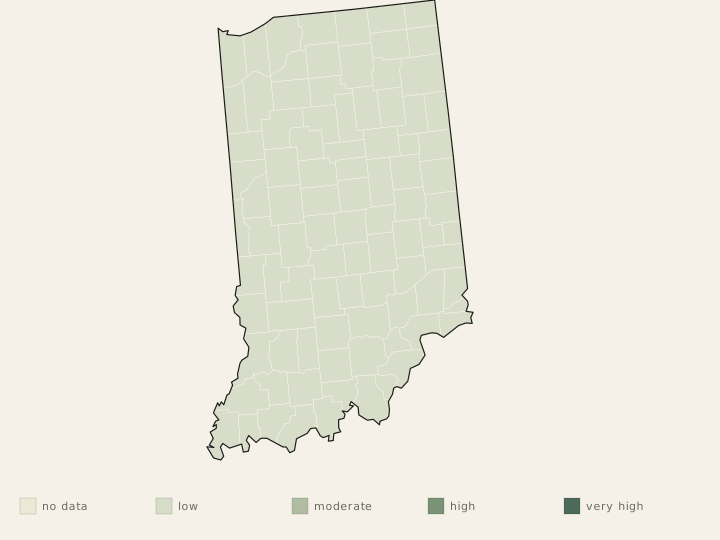
Common species in Indiana
Indiana follows the state health led source pattern. The species below are drawn from the state-authority sources listed in the sidebar Data Row.
- Brown dog tick (dog/kennel context)
- Gulf Coast tick (limited; expansion-watch context)
- Asian longhorned tick (BOAH + Purdue surveillance — established in multiple IN counties)
- Blacklegged tick (continued expansion frontier in northern + southern IN)
- Lone star tick (northward expansion documented)
When ticks are most active
Broad caution April through October. American dog tick peaks spring-summer; lone star tick activity May-August; blacklegged tick nymphs peak May-July (northern + southern IN). Indiana is genuinely a multi-tick frontier with both Midwest expansion patterns visible.
Where you're most likely to encounter ticks
Brown County + Hoosier National Forest, Indiana Dunes National Park, Turkey Run + Shades State Parks, Patoka Lake, Indianapolis + Fort Wayne + Evansville suburban edges, Purdue + Bloomington area trails, hunting properties statewide, dog walking in any wooded or tall-grass edge.
Disease context
Each disease named below carries an evidence tag per the Data Row policy. Pills indicate the strength of state-specific evidence, not the severity of the disease. Symptoms should always be routed to a clinician; this is orientation, not diagnosis.
- Ehrlichiosisstate surveillance confirmed
- Rocky Mountain spotted feverstate surveillance confirmed
- Lyme diseasestate surveillance confirmed
ISDH publishes Lyme surveillance; northern + southern IN counties lead. Indiana is a Lyme-expansion frontier
- Anaplasmosisstate surveillance confirmed
- Alpha-gal syndromeregional pattern
Lone star expansion + IN in the watch zone
- Babesiosisnon diagnostic mention only
- Powassan virus diseasenon diagnostic mention only
If you find a tick — what to do
Map resolution notes
mixed resolution.ISDH publishes county-level data supporting county-resolution claims. Indiana is an active expansion zone — county-resolution data is genuinely useful because risk varies between southern (lone star + blacklegged corridor), central (mixed), and northern (lake-effect, blacklegged). Purdue Extension covers ecoregion-resolution. CDC maps support national comparison.
State sources
- Primary species source
- Indiana State Department of Health (ISDH) Zoonotic Diseases + Tickborne Diseases hub; Purdue University Extension entomology publications.
- Primary health source
- ISDH Zoonotic Diseases tickborne disease surveillance + reportable disease summaries; CDC pages and maps for national guardrails.
- Primary extension source
- Purdue Extension publications on Indiana tick species, life cycles, lone star + blacklegged expansion, and yard/property tick management.
- Surveillance
- ISDH county-level tickborne disease surveillance; Indiana Board of Animal Health (BOAH) animal-health + Asian longhorned tick monitoring; Purdue University entomology; CDC for national comparison.