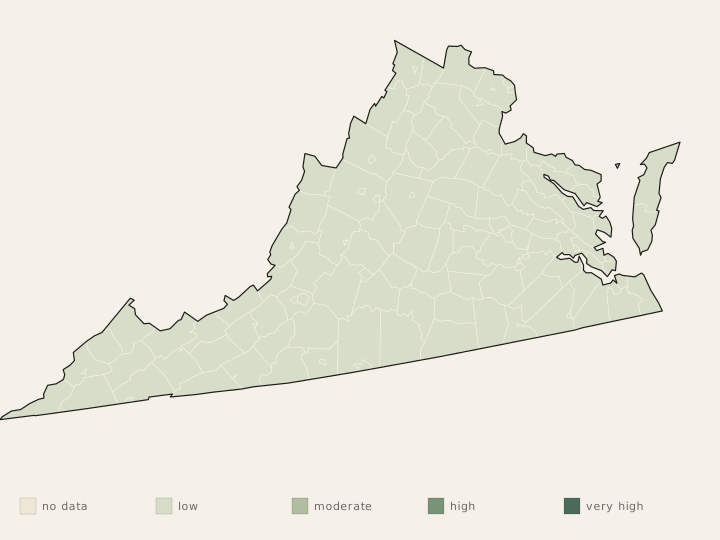
Common species in Virginia
Virginia follows the state health led source pattern. The species below are drawn from the state-authority sources listed in the sidebar Data Row.
- Brown dog tick (dog/kennel context)
- Gulf Coast tick (limited southeastern + coastal presence)
- Asian longhorned tick (VDACS + VDH surveillance — established in multiple VA counties)
When ticks are most active
Broad caution April through October. Blacklegged tick nymphs peak May-July (Northern Virginia + Shenandoah corridor leads Lyme); lone star tick activity May-August (statewide and a major AGS driver); American dog tick spring-summer.
Where you're most likely to encounter ticks
Shenandoah National Park + Blue Ridge hiking, Northern Virginia suburban edges (Fairfax/Loudoun/Prince William), Richmond + central VA trails, Tidewater + Hampton Roads, Charlottesville + Albemarle County, Great Dismal Swamp, hunting properties statewide, dog walking in any wooded or tall-grass edge.
Disease context
Each disease named below carries an evidence tag per the Data Row policy. Pills indicate the strength of state-specific evidence, not the severity of the disease. Symptoms should always be routed to a clinician; this is orientation, not diagnosis.
- Lyme diseasestate surveillance confirmed
VDH publishes Lyme surveillance; Northern Virginia + Shenandoah Valley counties have the highest VA per-capita Lyme rates
- Alpha-gal syndromestate unique angle
Virginia is at the heart of the documented AGS high-incidence cluster; UVA-led research has been central to AGS understanding
- Rocky Mountain spotted feverstate surveillance confirmed
- Ehrlichiosisstate surveillance confirmed
- Anaplasmosisstate surveillance confirmed
- Babesiosisstate surveillance confirmed
- STARIregional pattern
- Tularemianon diagnostic mention only
If you find a tick — what to do
Map resolution notes
mixed resolution.VDH publishes county-level Lyme + tickborne disease data supporting county-resolution claims. Virginia Cooperative Extension covers ecoregion-level claims (Mountains vs Piedmont vs Tidewater). Asian longhorned tick distribution actively updated by VDACS. AGS clustering data is documented at the regional level by UVA. CDC maps support national comparison.
State sources
- Primary species source
- Virginia Department of Health (VDH) Tickborne Disease + Lyme Disease hub; Virginia Cooperative Extension (Virginia Tech) entomology publications.
- Primary health source
- VDH Tickborne Disease + Lyme Disease pages; VDH Office of Epidemiology reportable disease summaries; UVA research on alpha-gal syndrome (Platts-Mills lab and associated programs); CDC pages and maps for national guardrails.
- Primary extension source
- Virginia Cooperative Extension (Virginia Tech) publications on VA tick species, alpha-gal syndrome, and yard/property tick management.
- Surveillance
- VDH county-level Lyme + tickborne disease surveillance; Virginia Department of Agriculture and Consumer Services (VDACS) animal-health + Asian longhorned tick monitoring; Virginia Tech entomology + CDC-funded Mid-Atlantic Center of Excellence in Vector-Borne Diseases (with Cornell + others); CDC for national comparison.